7. The Ferro on Front Is Functional and Full of Meaning
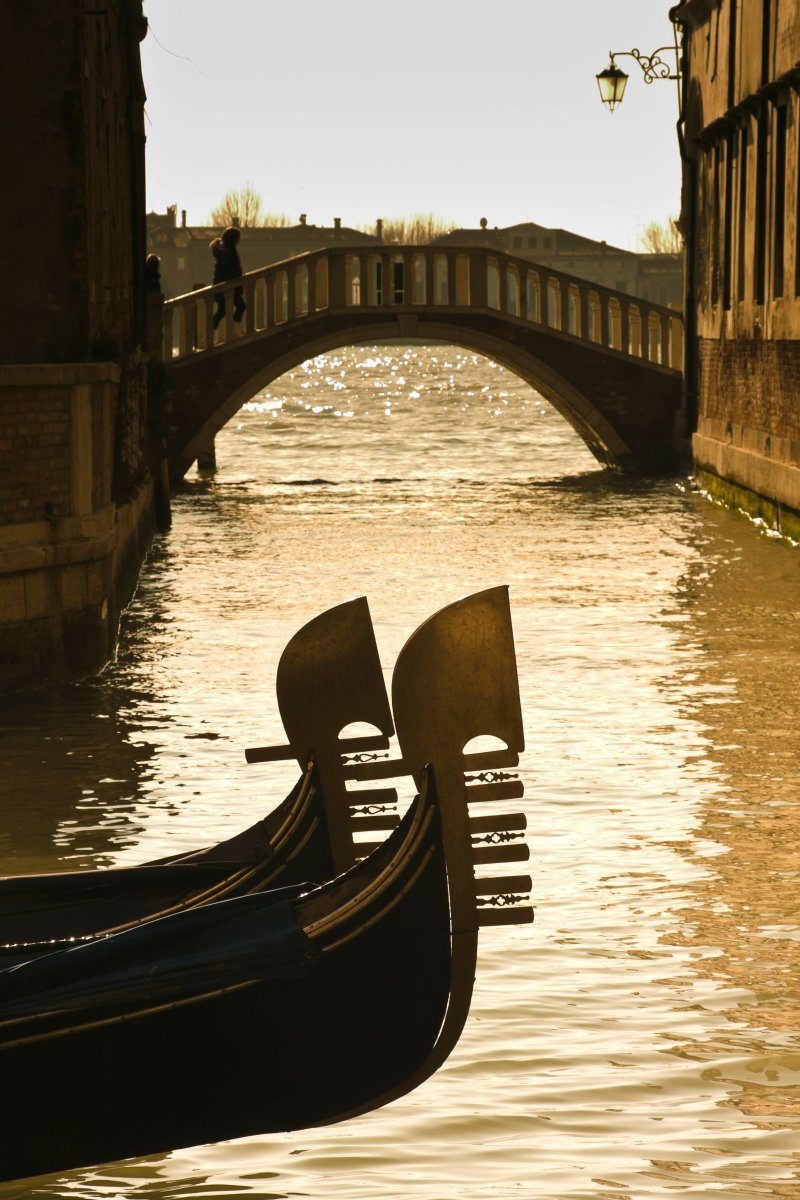
That decorative hood ornament at the prow is called the ferro, and it’s full of symbolism. For starters, it’s in an S shape which represents the curve of the Grand Canal as it bisects the island of Venice. The six prongs (pettini) represent the six districts of Venice, known as the sestieri. The one backwards facing prong symbolizes the island of Giudecca which is just south of the main island of Venice. The embellishment at top of the ferro echoes the shape of a Doge’s cap (an elected magistrate of the republic) and the little arch between the flourish and the top prong represents the Rialto Bridge. Beyond its symbolic/ornamental touch, the ferro also serves as a kind of protective bumper in case the gondola collides with other boats or walls, plus it’s a bit of a counterweight for the gondolier standing at the back.
8. The Woodworking Involved Is Specific and Detailed
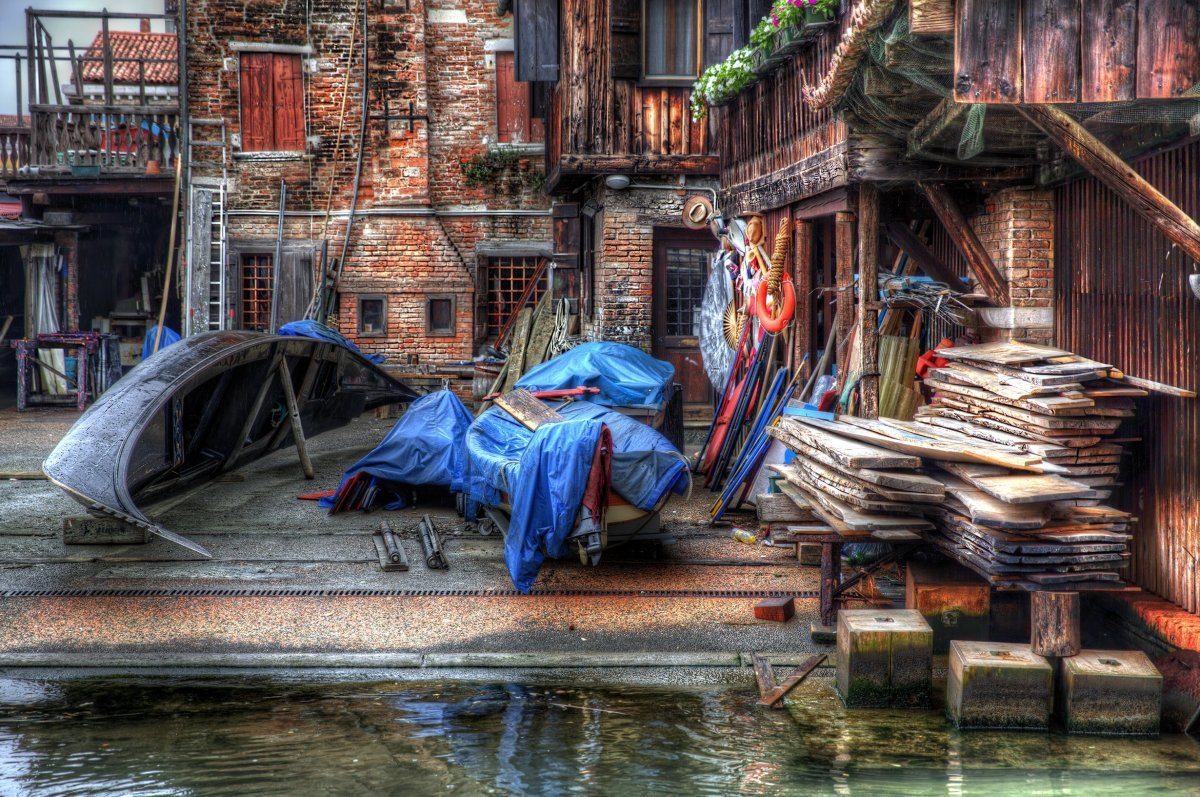
A lot of craftsmanship goes into the making of these tapered vessels. Each hull is made out of 280 intricately cut pieces using 8 different kinds of wood – oak, elm, lime, larch, fir, cherry, walnut, and mahogany. The oar is made of beech and the forcole (the stylized oarlock) is made of walnut. All the timber used has to be seasoned for a year.