Ever want to say something but just can’t find the right word to express it? Maybe you’re looking in the wrong language. Various tongues around the world have clear ways to convey certain elusive feelings, poetic descriptions or quirky concepts, but sadly there’s just no English equivalent. What they can express in one efficient utterance, we have to babble forth a long-winded explanation, and something invariably gets lost in translation. The very notion kind of evaporates without a concrete word to anchor it. Need some examples? Here are 20 ingenious foreign words that don’t exist in English – but should. You’ll wonder how we live without corresponding words for “bacon grief” or “cable salad”.
1. Kilig (Tagalog)
noun: That disorienting, churning, fleeting feeling of butterflies in your stomach, often when something romantic is happening. We’ve all experienced it – now there’s a clear word for it.

2. Hiraeth (Welsh)
noun: That melancholy nostalgic homesickness for a past or place you can’t return to, or perhaps never was. The Welsh often get wistful for the elusive Wales of yesteryear.

3. Tima (Icelandic)
verb: Not being quite ready to spend time or money on something, even though you can actually afford it. Most of us suffer from quite the opposite.

4. Kummerspeck (German)
noun: Finally, there’s a word for that extra weight we gain from emotional comfort-eating. Most women can relate to this one. The word literally translates to “grief bacon”, making it one of the the best foreign words ever.

5. Vacilando (Spanish)
verb: Wandering aimlessly or traveling when its more about the experience than the destination. The most rewarding spontaneous adventures seem to spring out of this concept.

6. Trepverter (Yiddish)
noun: That perfect witty comeback you think of only after you’ve walked away from the situation, when its too late to hit them with your brilliance. It literally means “staircase words”. We’ve all had ’em.

7. Mångata (Swedish)
noun: A word for the glimmering, road-like reflection that the moon creates on the surface of water. It’s such a lovely sight it deserves a word, don’t you think?

8. Kabelsalat (German)
noun: That entangled mess of wires, cables and cords that is all-too-familiar in this device-laden digital age. It literally means “cable salad”. Oh, what a tangled web we weave.

9. Komoreibi (Japanese)
noun: That green dappled sunlight that filters through the canopy of leaves in the trees. Brief yet poignant haiku poems are known for evoking this kind of imagery.

10. Samar (Arabic)
noun: An enjoyable evening conversation between friends that goes on long after the sun goes down. Sometimes implies the softly spoken pillow-talk conversations between lovers.

11. Meraki (Greek)
adjective: Throwing yourself into a task wholeheartedly with such abundant creativity and love, it doesn’t feel like a chore. For example, cooks often find that meraki passion in the kitchen.

12. Razliubit (Russian)
verb: That melancholy yet irreversible sensation of falling out of love with someone, and there’s nothing you can do to get it back. Poets and song writers throughout the ages have tried to convey what Russian captures in one word.

13. Akihi (Hawaiian)
noun: Listening to directions and then forgetting them the second you walk off. Such a familiar and frustrating concept, and now there’s a word for it.

14. Boketto (Japanese)
noun: Staring mindlessly into the distance without any specific thoughts in your head. Isn’t nice to have a name for vacuously gazing into space?

15. Glaswen (Welsh)
noun: This literally translates to a “blue smile”, meaning a smirk that is insincere, sarcastic or mocking. English needs a word for this, as high school halls are full of it.

16. Jugaad (Hindi)
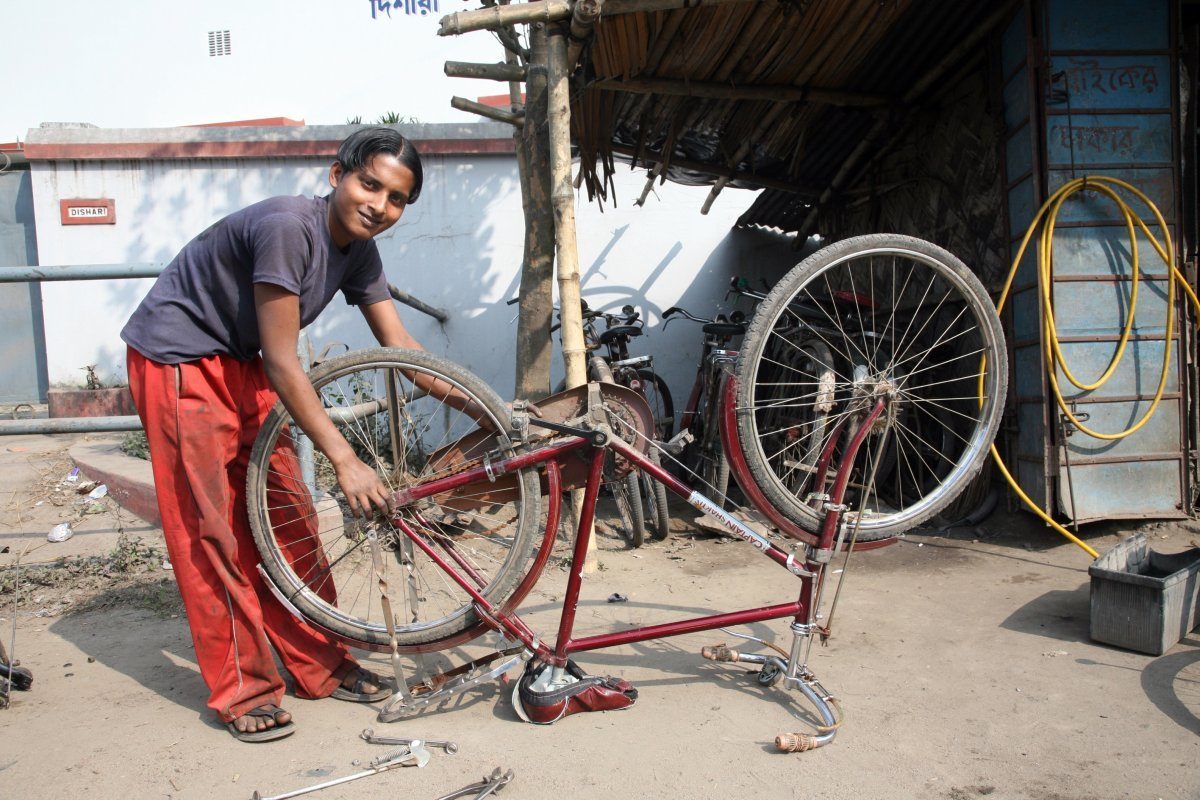
noun: Innovating, solving problems and getting things done frugally and with minimal resources. MacGyver was the very essence of this word.
17. Struisvogelpolitiek (Dutch)
noun: Acting like you didn’t notice something and continuing on as normal, even though everyone knows something happened – like when someone farts at the dinner table. The word literally translates into “ostrich politics”, burying one’s head in the sand for politeness’ sake.

18. Resfeber (Swedish)
noun: That restless mix of excitement and apprehension before one embarks on a journey. One part anxiety, one part anticipation. Don’t let it stop you from going.

19. Drachenfutter (German)
noun: A gift a husband gives his wife when he is trying to suck up for some bad behavior, like forgetting an anniversary. It literally translates to “dragon fodder”. PS guys, it doesn’t always work.

20. Bakku-shan (Japanese)
noun: A woman who appears pretty from behind but not from the front. Have you been fooled by this before?