With news of African American abolitionist Harriet Tubman gracing the new $20 bill, the nation’s shameful history steeped in slavery is being duly acknowledged. Slavery was not only an issue in America, however, but a worldwide scourge (still going on today in some places). Today there are some excellent museums dedicated to this topic, such as the International Slavery Museum in Liverpool, the Ancient Africa, Enslavement and Civil War Museum in Selma, Alabama and the Smithsonian National Museum of African American History and Culture in Washington, D.C. Most of what remains to commemorate this era are simple monuments, humble historical markers and modest memorials to slavery scattered across the globe. It is said that those who don’t know history are doomed to repeat it, so if you happen to be in these locations, stop by and pay homage to the past, however uncomfortable it may be.
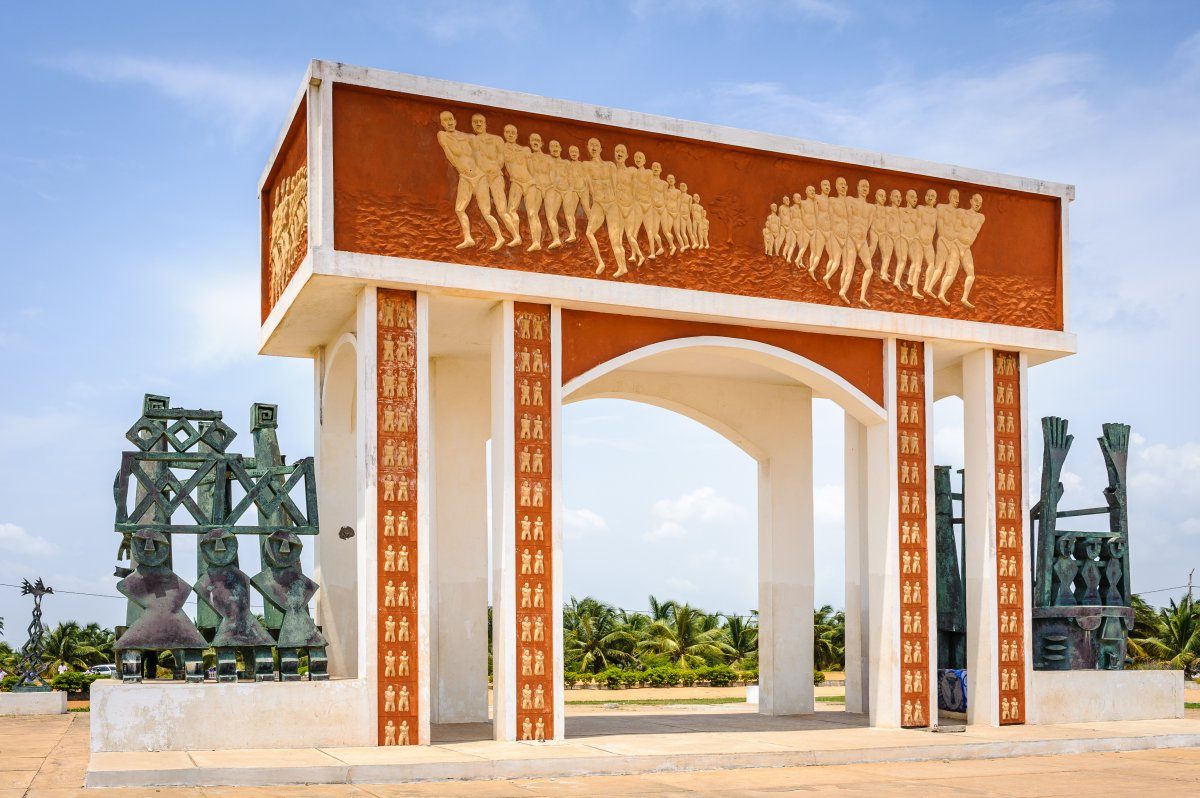
1. Gateway of No Return – Ouidah, Benin
This 50 foot arched gateway stands on the edge of a pristine West African beach, on the shores of the Atlantic. It’s a bleak reminder that this launching point once sent many Africans to the Americas for slavery. Across the top of the gateway is an etching of two lines of chained men disappearing into the ocean.
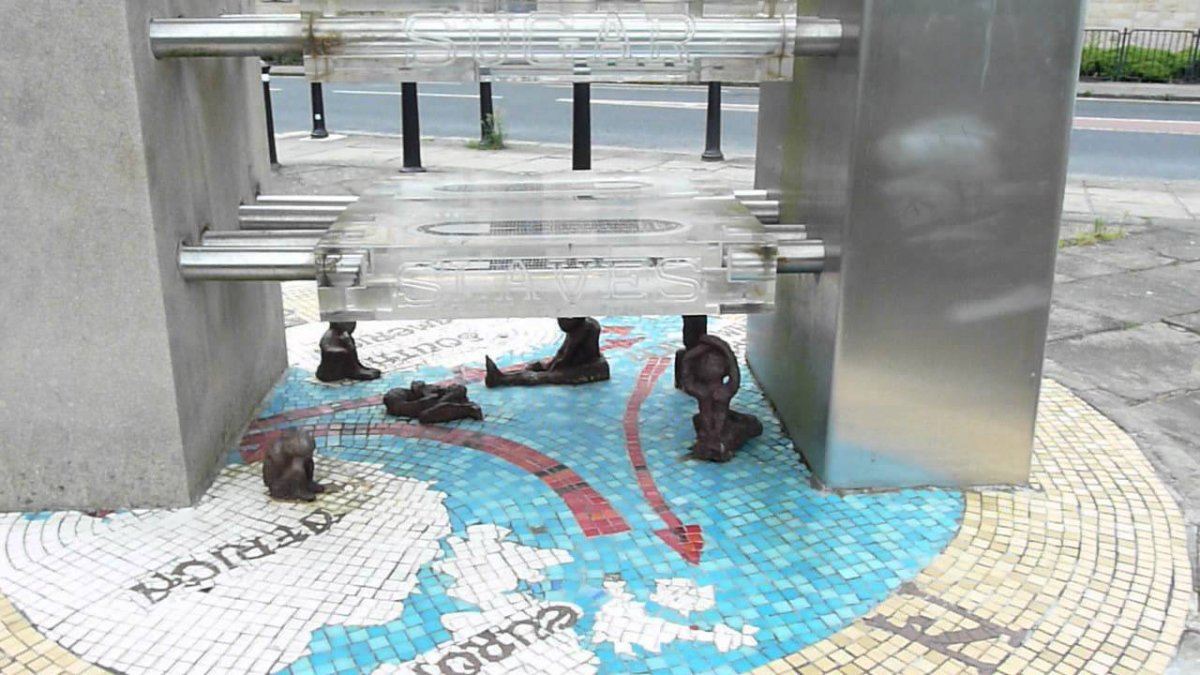
2. Captured Africans – Lancaster, UK
Lancaster marks its role in the African slave trade with this moving memorial by Kevin Dalton-Johnson, which was unveiled on October 10th, 2005. The city was the 4th largest slave port in Britain, and was responsible for the forced transportation of about 25,000 African “cargo” via 200 voyages in the 18th century.
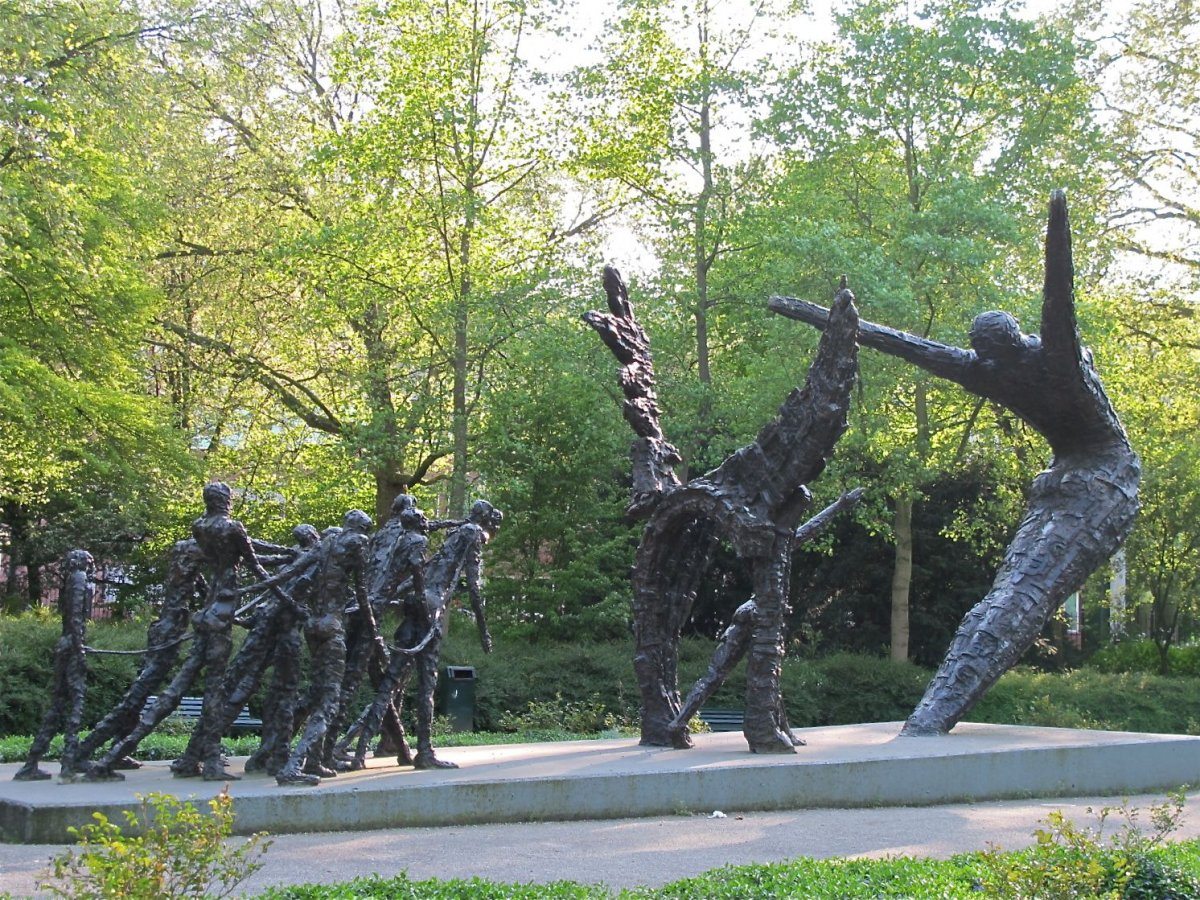
3. National Monument of Slavery – Amsterdam, The Netherlands
139 years after slavery was abolished in the Netherlands, this monument was erected in Amerstam’s Oosterpark. There aren’t many reminders of this historical legacy in the city, even though massive amounts of African slaves were brought to the Americas to work on Dutch plantations in Aruba, Suriname and the Dutch Antilles through the Dutch West India Company, which was headquartered here.
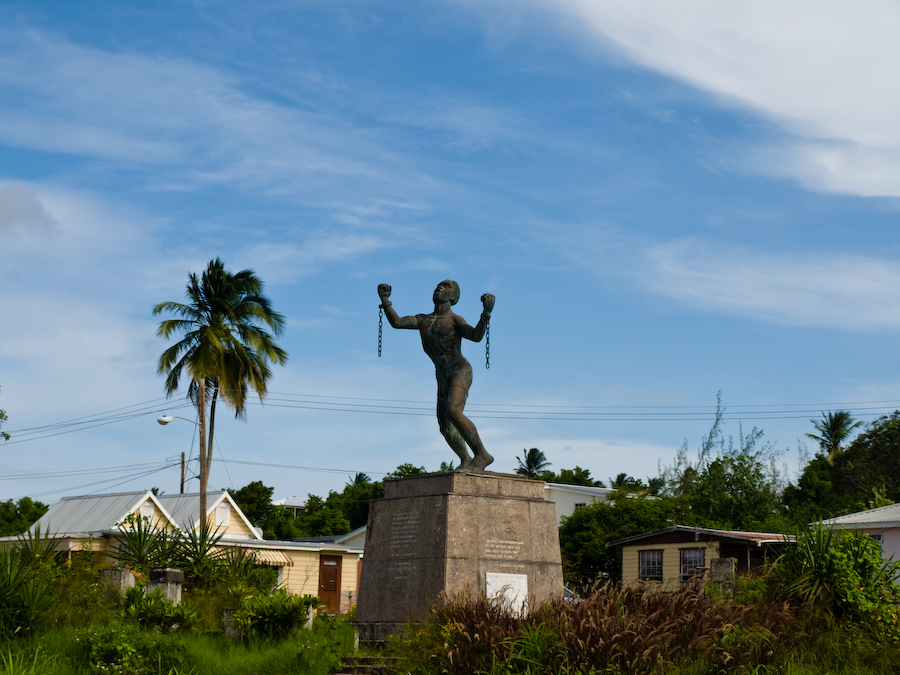
4. Emancipation Statue – Barbados
Standing in the middle of a Barbadian traffic roundabout is this statue locally known as “Bussa”, the name of the slave who inspired a revolt against slavery on the island in 1816. Barbados was the jewel of the British West Indies, rich in sugar cane that was primarily cultivated on the backs of West African slaves as far back as 1661. While most people are aware of the African slave trade in the Caribbean, there were also tens of thousands of white Irish slaves brought to the region, treated horribly as “human livestock”. Sadly, no memorial to the plight of these men, women and children has been erected to date.
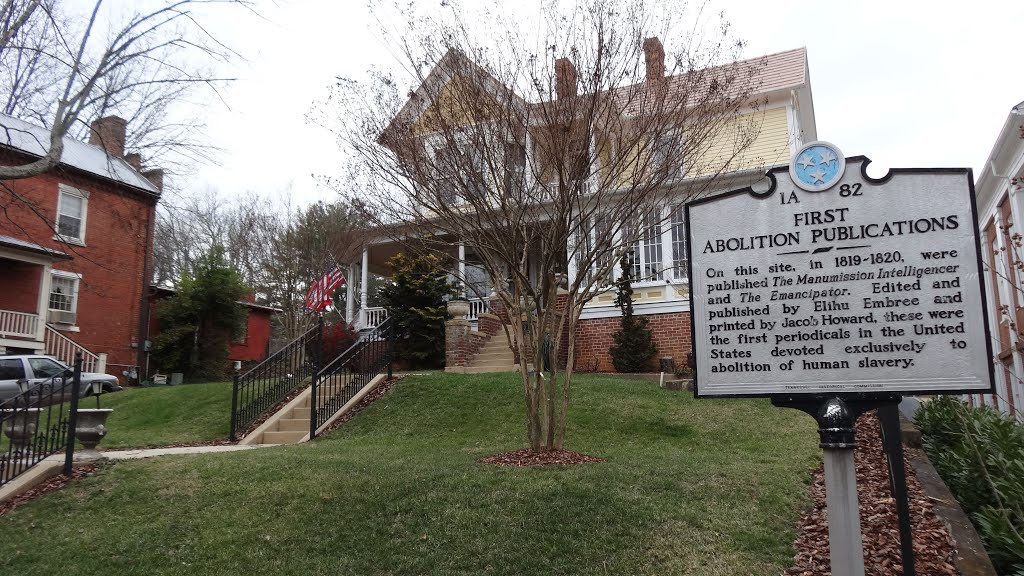
5. “First Abolitionist Publications” Marker – Jonesborough, Tennessee
This unassuming marker honors Elihu Embree, a Quaker man who published the first periodicals in America dedicated to the abolition of human slavery, which was an important catalyst for change.
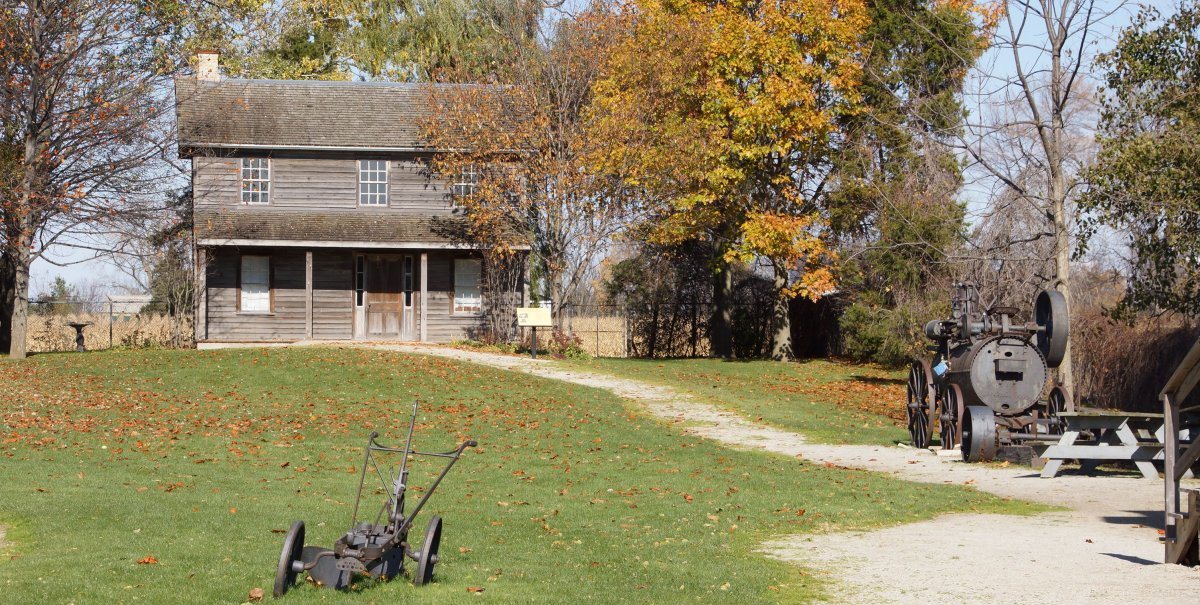
6. Uncle Tom’s Cabin – Ontario, Canada
The inspiration for Harriet Beecher Stowe’s famous book was the man who wrote the 1849 autobiography The Life of Josiah Henson, Formerly a Slave, Now an Inhabitant of Canada, as Narrated by Himself. His cabin, located near Dresden, Ontario, is now part of an open-air museum complex that commemorates the Dawn Settlement, a community for escaped slaves that was established in the area.
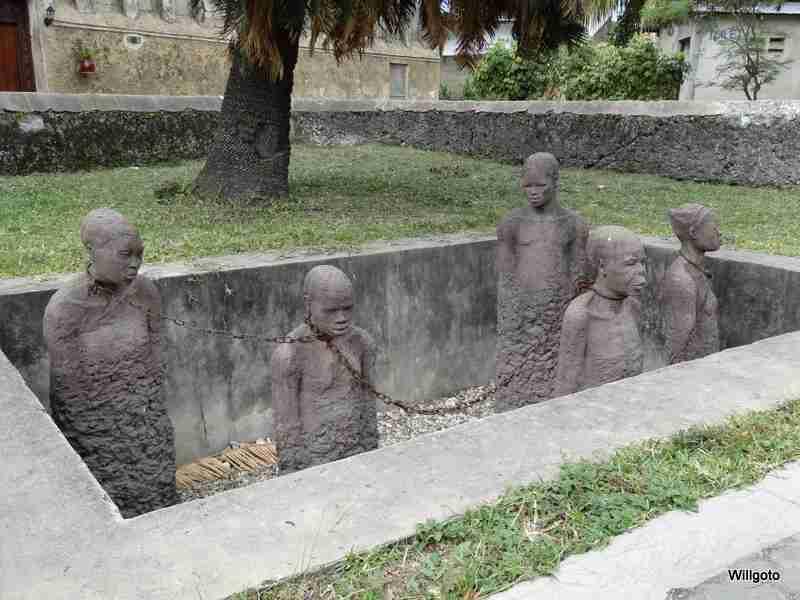
7. Slave Market – Zanzibar, Tanzania
This haunting statue doesn’t sugar coat the horrors of the slave trade. It is built on the site of one of East Africa’s biggest slave markets that was still doing a brisk business up until 1873. Some say it was the last legal slave market in the world. You can also visit the underground chambers where men, women and children were held before being auctioned off to the highest bidder. There was even a nearby “whipping tree” to show the strength of the slaves. Those who didn’t cry out fetched a better price.
8. Passage to Freedom – Oberlin, Ohio
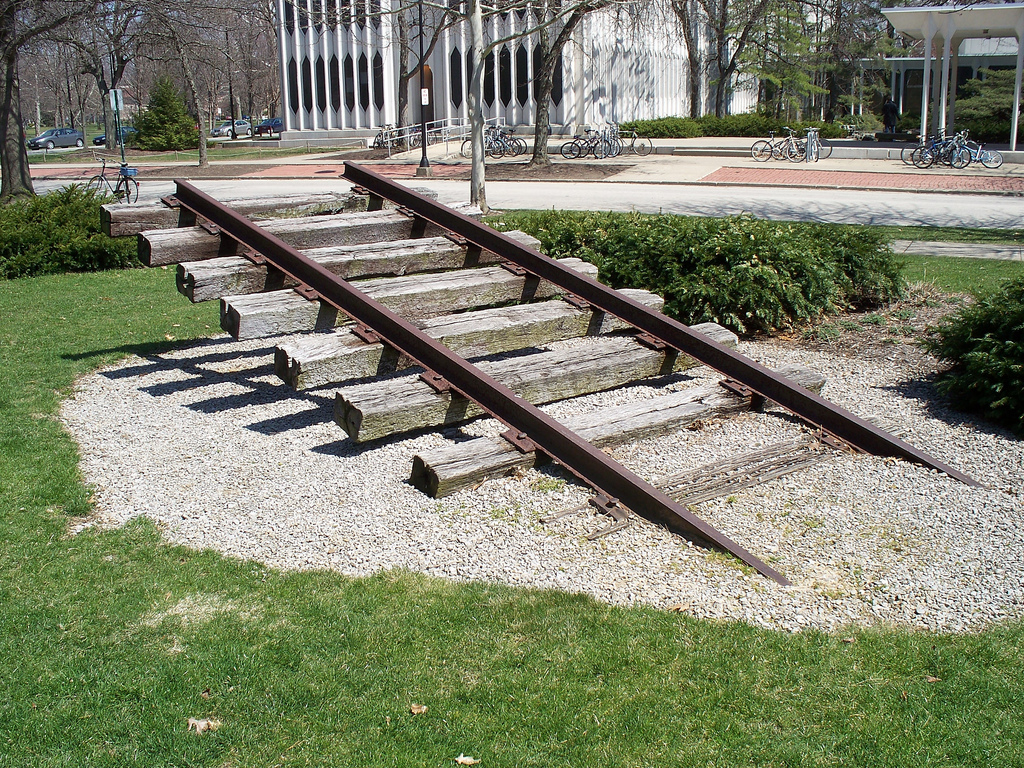
The campus of Oberlin College features a student art project that commemorates the city as a significant stop on the Underground Railroad. Abolitionists opposed to slavery helped establish this secret route north to Canada so slaves could escape to freedom during the Civil War.
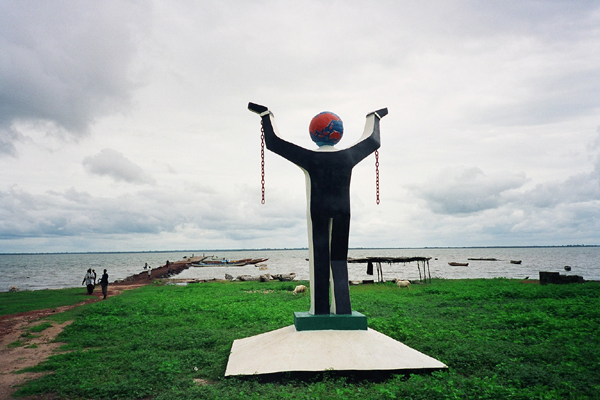
9. Freed Slave Statue – Kunta Kinteh Island, The Gambia
This simple yet powerful statue is situated on a small island where Fort James was once a busy center for shipping off West African slaves to the other side of the world. Alex Haley, of Roots fame, traced his ancestor Kunta Kinteh to being processed here in 1767. Alex Haley himself has a bronze statue in Knoxville, Tennessee to honor his role in sparking the conversation about America’s slave-filled past.
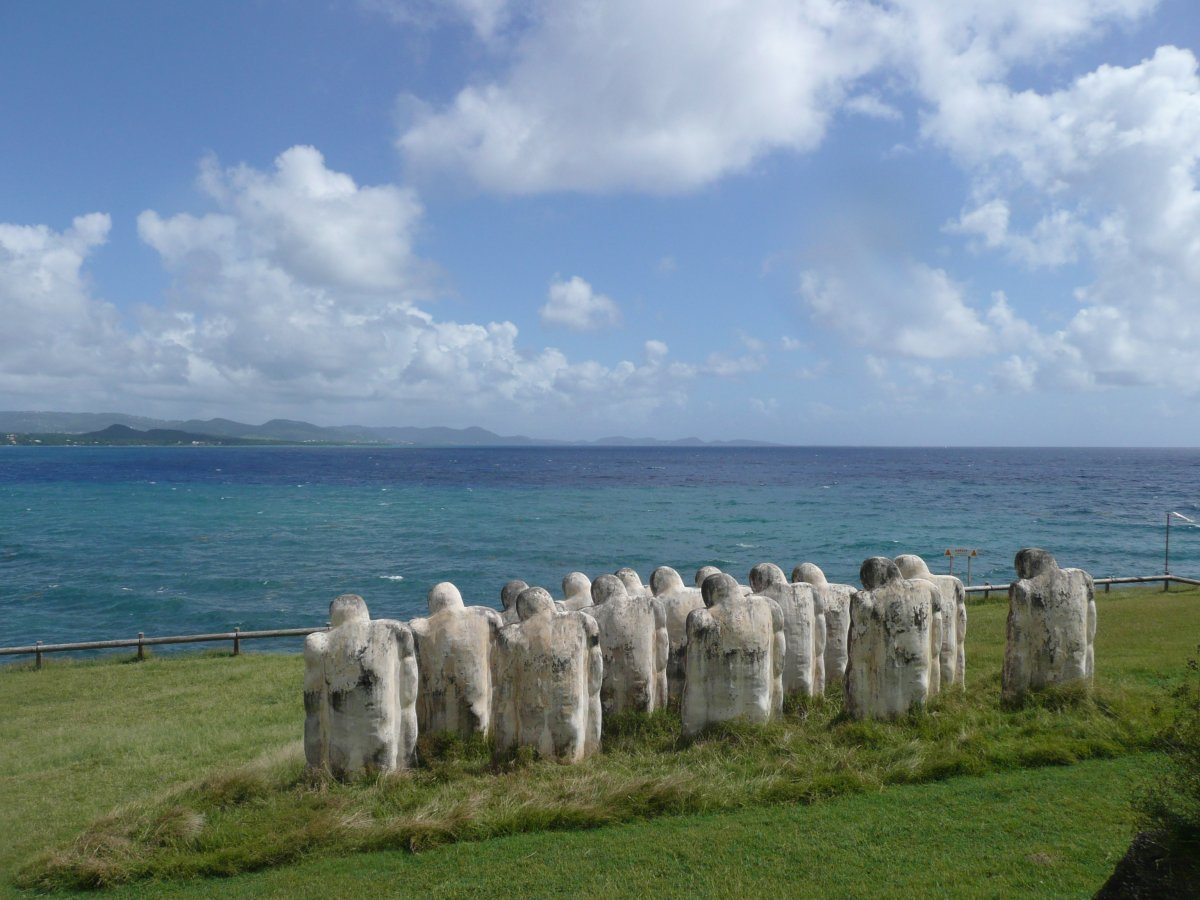
10. Anse Cafard Slavery Memorial – Martinique
The French West Indies was also built on the backs of slaves. This moving memorial near Diamond Rock is comprised of 20 effigies that stare blankly out to the ocean where a slave ship sank in 1830, killing all who were chained in the cargo hold.
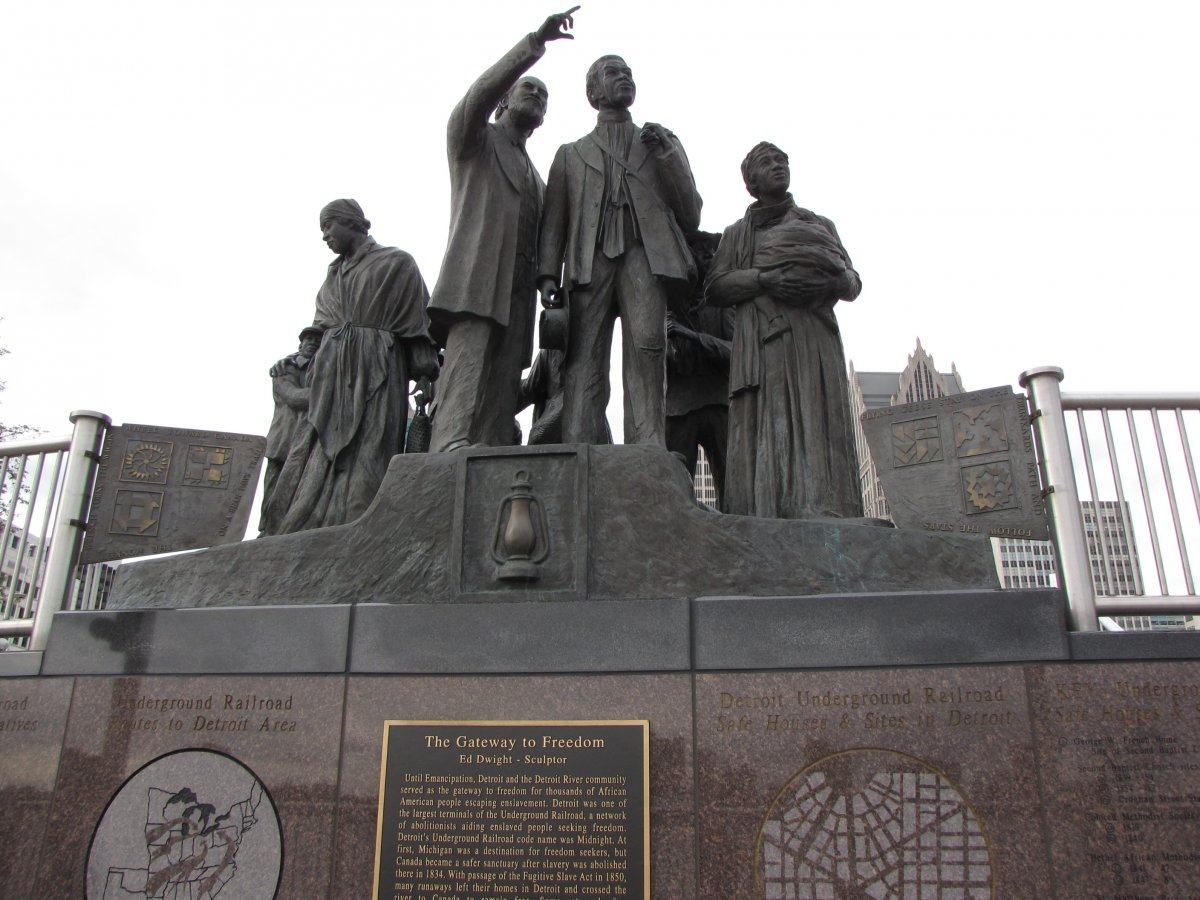
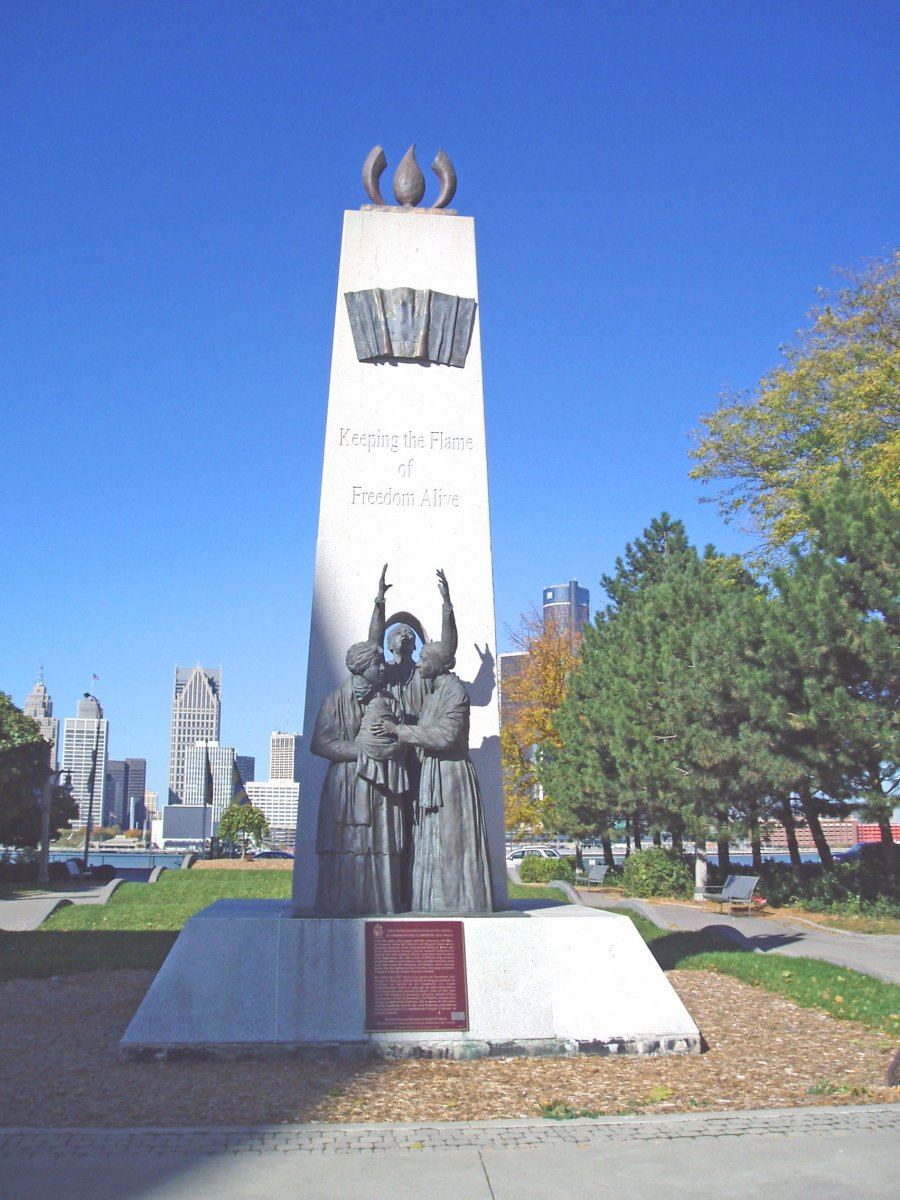
11. International Memorial to the Underground Railroad – Detroit, Michigan and Windsor, Ontario
This dual memorial bridges the border between America and Canada in homage to the area where many American slaves fled north of the border on the “underground railroad” to freedom during the Civil War. On the Detroit side is a statue called the Gateway to Freedom and on the Windsor side is the Tower of Freedom.
12. Slavery Memorial – Paris, France
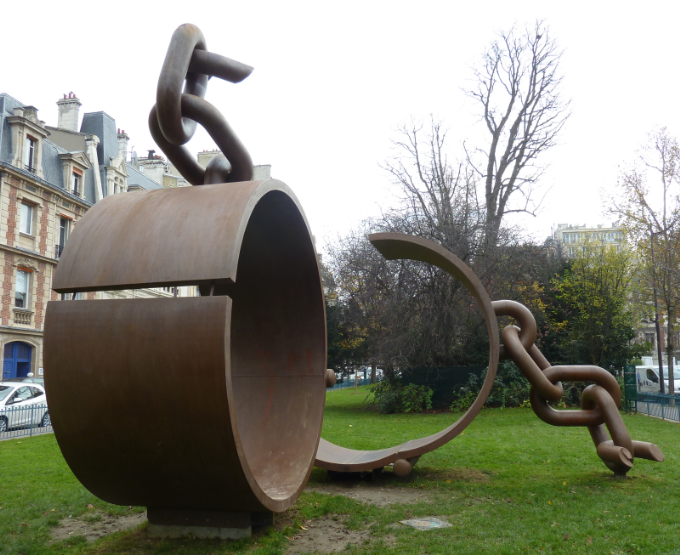
In 2008, this replica of shackles and chains was installed in Place du Général Catroux in Paris. It’s dedicated to Thomas Alexandre Dumas, the French army’s first general of Afro-Caribbean descent who was a son of a slave.
13. African American Slavery Monument – Savannah, Georgia
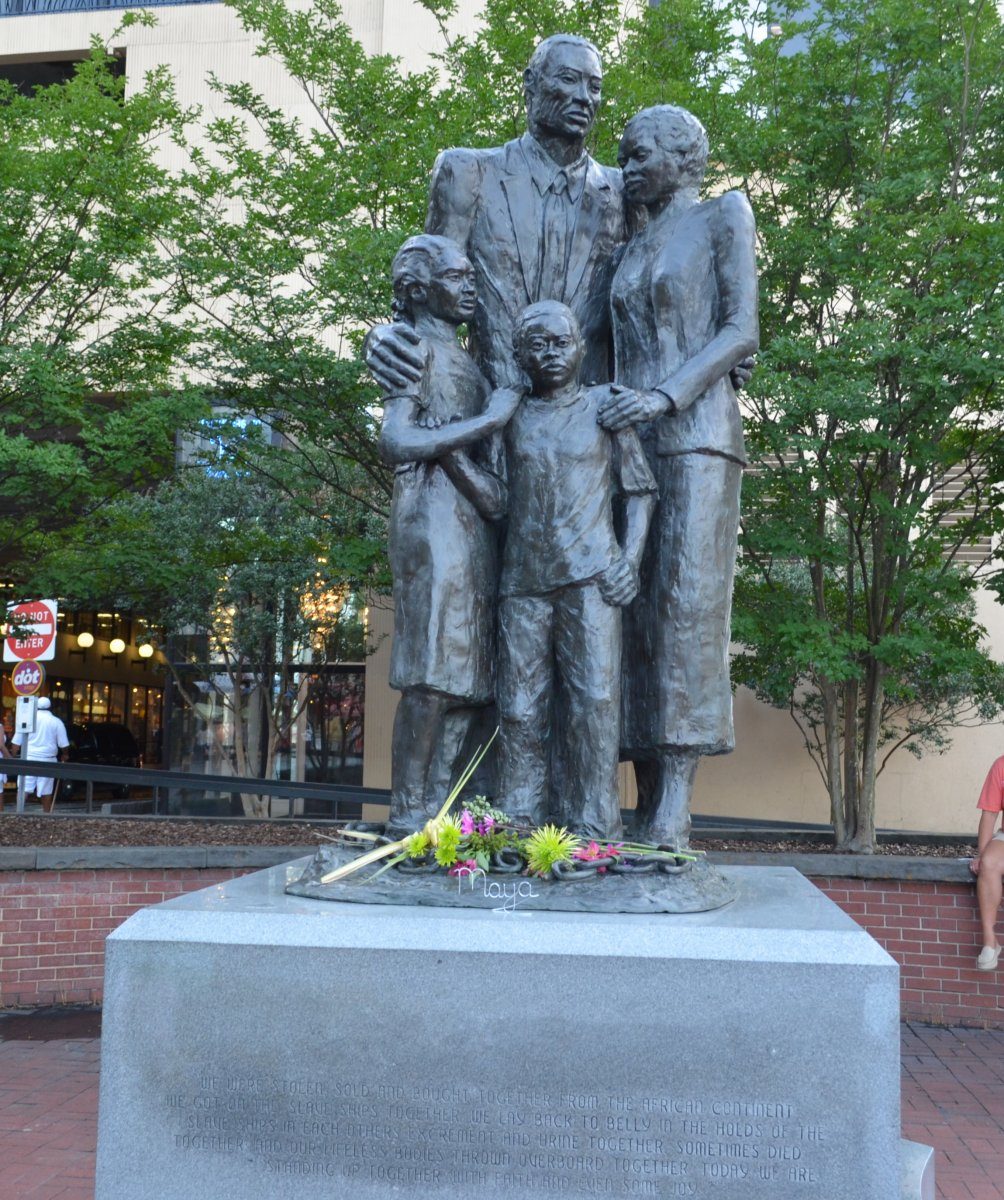
This statue of a huddled family with broken chains at their feet has an ultimately uplifting message. It is inscribed with the poetic words of Maya Angelou: “We were stolen, sold and bought together from the African continent. We got on the slave ships together. We lay back to belly in the holds of the slave ships in each others excrement and urine together, sometimes died together, and our lifeless bodies thrown overboard together. Today, we are standing up together, with faith and even some joy.”
14. Slave Memorial – Cape Town, South Africa
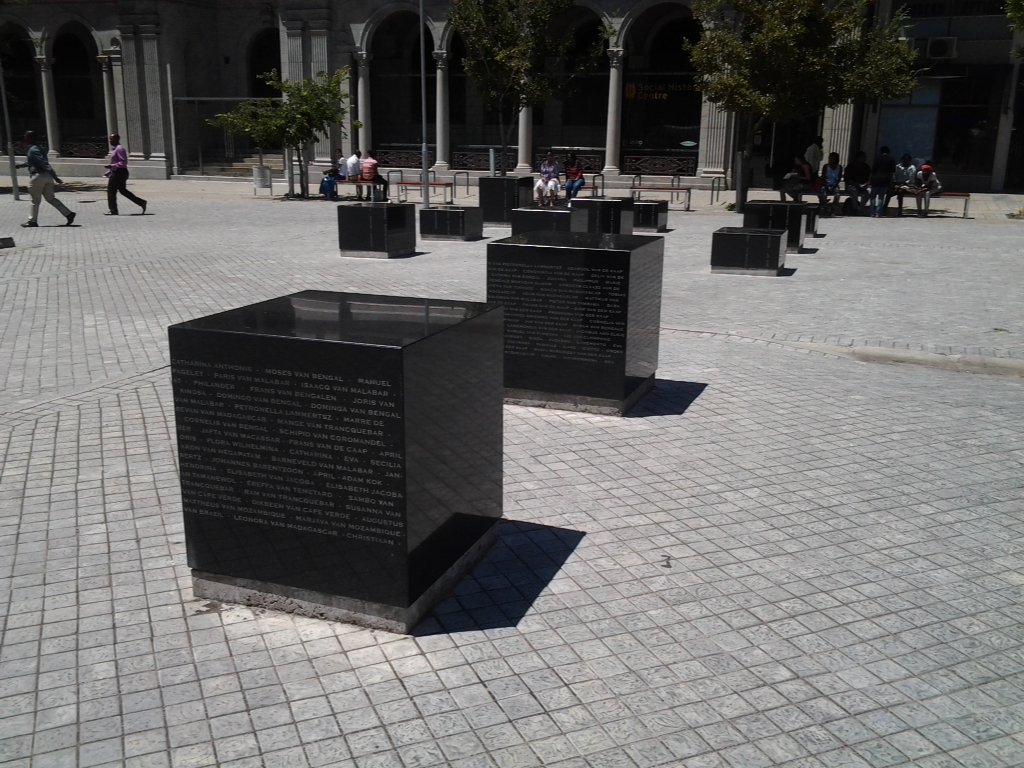
Eleven polished granite slabs engraved with names of slaves serve as a stark reminder of the human suffering and contribution slaves made to the city’s culture and heritage.
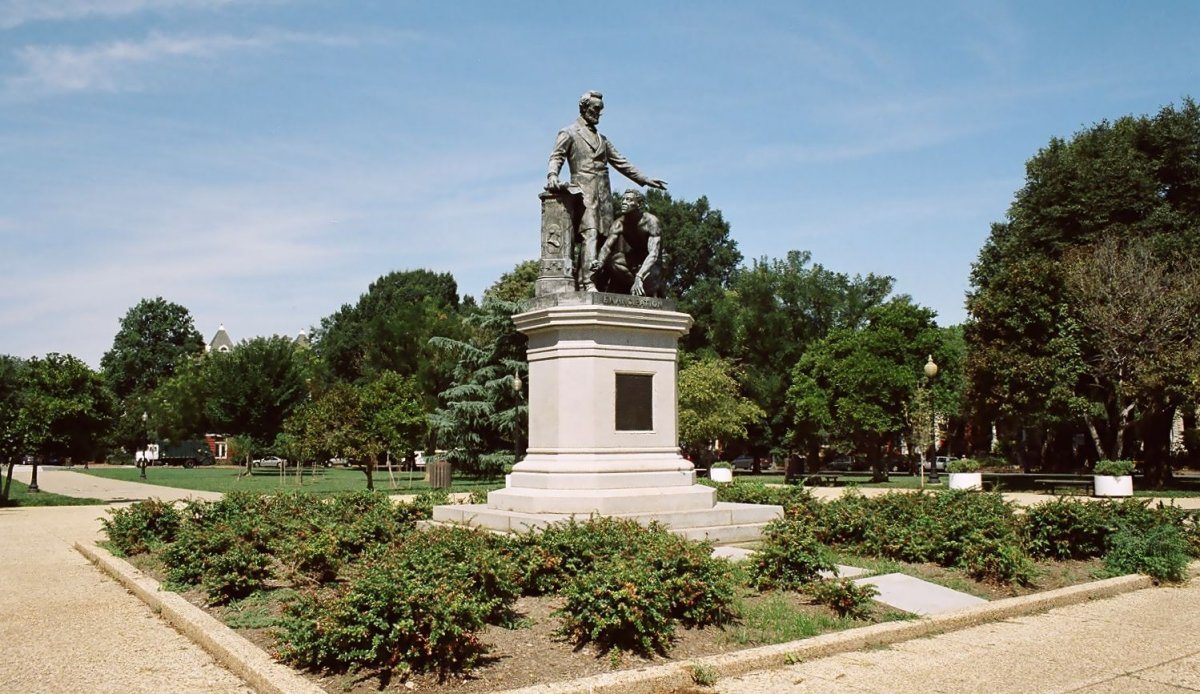
15. Emancipation Memorial – Washington, DC
Capitol Hill’s Lincoln Park is the setting for this controversial statue that was dedicated back in 1876. It captures the sentiments of a bygone era and rubs many people the wrong way today. It shows a regal President Lincoln holding the Emancipation Proclamation while resting his hand on the head of a kneeling freed slave, who looks up at him forlornly. It seems to position Lincoln as the freer of the black man, the wise savior of the race that didn’t know how to save itself. The statue itself was paid for by freed slaves at the time, but art directed by a committee of white men.